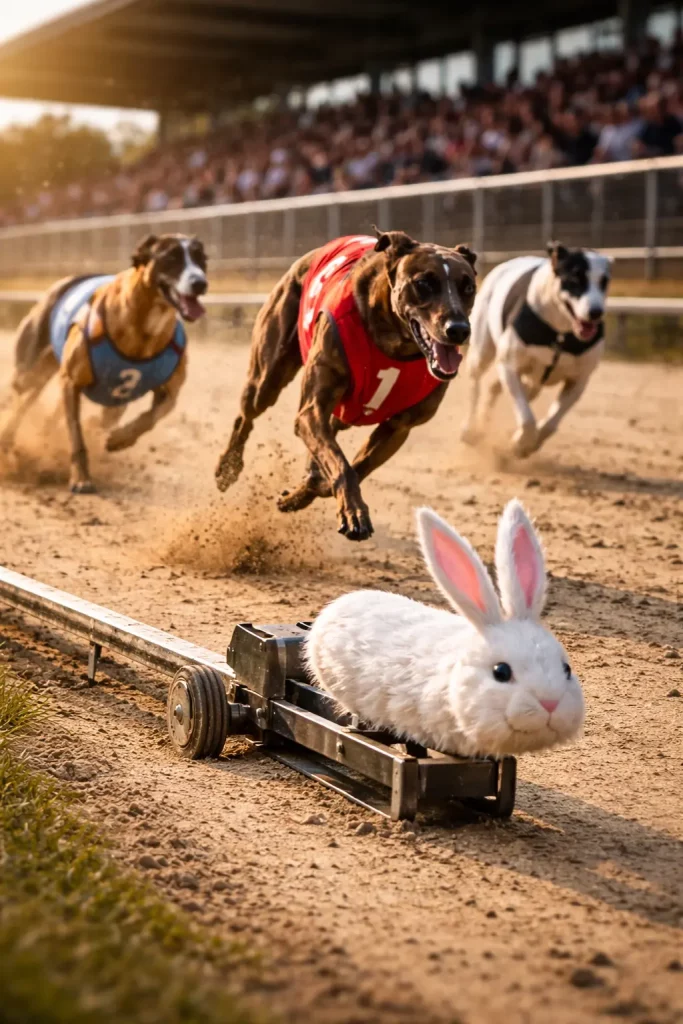
I run the lure at our local club. I sit in the little booth, hands on the throttle, and make the “bunny” go. That bunny is a mechanical hare. It’s a foam rabbit on a steel arm that zips round the rail. The dogs chase it. I love the job, and yes, it can be nerve-wracking too. If you’ve ever wanted the nuts-and-bolts view of how these lures trick a speedy hound’s eye, this concise explainer on mechanical hares in greyhound racing gives a clear picture of the tech that keeps the chase alive.
Here’s the thing. A good hare makes the whole night feel smooth and safe. A bad one? You feel it right away.
What I Used, Where I Used It
Our main track runs a Swaffham outside hare on a 400-meter sand oval. Power is from the mains. The speed is set with a simple control box. There’s a dead-man switch. If I let go, it stops. It’s loud, but not wild loud—more like a steady whirr with a soft hum. The set-up traces back to the Swaffham Raceway model in Norfolk, so the footprint feels both traditional and robust.
I also spent two weekends with a Bramich unit on a straight trial track in Victoria when I visited family. That one felt a bit punchier on start. Same idea, though: foam bunny, rail, hand throttle, all eyes on me.
Two systems. Many nights. Lots of lessons.
First Nights and the Learning Curve
My first race night, my right hand shook. The trick is to keep the bunny about six to eight lengths ahead of the lead dog. Too close and they bunch. Too far and they lose interest. You know what? It’s a bit like flying a kite—smooth hands help, and you feel the wind.
Race 3, wet Saturday, I was late on the bend. I eased off too much, and the dogs closed fast. I hit the switch a half second early, then fed more power slow and steady. We were fine. Still, I took a deep breath after the finish. I wrote a note on the control box: “Bend 1—don’t panic.”
On the Bramich straight track, starts were snappier. One young dog blasted from the slips and surprised me. I learned to feed the throttle before the slip opened, so the bunny moved right as the doors popped.
Noise, Vibe, and How the Dogs React
The Swaffham hare makes a fair bit of rail noise on the far turn. It’s a metal-on-metal chatter when the arm hits a splice. We put a small rubber pad near that joint. It softened the sound. The dogs ran cleaner. Funny how one tiny noise can throw a pup off his line.
We also added a bright white strip on the bunny for night meets. Simple tape. Big help at dusk. Less bobble near the home turn because the dogs could spot it better under the lights.
Safety Bits That Actually Matter
- Dead-man switch: It’s always in my hand. If I freeze or slip, it cuts.
- Big red kill button: The steward has one at the first turn. I tested it. It works.
- Brake: On the Swaffham, the stop is firm but not jerky if you feather it. Good for tired late-race legs.
One night, a veteran bitch closed like a rocket on the final straight. I heard her paws slap harder in the wet. I held a touch more pace to keep shape, then eased at the winning post. No bunch, no spill. My heart still pounded.
Maintenance: The Not-So-Cute Part
You can smell the oil and clay dust when you open the rail cover. It’s not hard work, but it’s steady work.
What I do before every meet:
- Walk the rail and check the joins.
- Spin the wheels by hand. They should feel smooth.
- Tug the drive belt or cable for slack.
- Wipe the arm. Check bolts.
- Squeeze the foam bunny. If it’s soggy, swap it.
Once, a rainy Wednesday, the belt slipped right after the 500-meter boxes. I felt a shudder in the throttle. We paused trials, tightened the idler wheel, and ran a slow test lap. It held. Later, I added a little chalk to the belt in wet weeks. Old trick, still works.
On the Bramich set-up, dust got into the control box. The speed flickered once. We added a cheap rubber boot over the switch and tucked silica gel packs inside the panel. No more flicker after that.
How It Handles Weather
Rain: The Swaffham ran fine in light rain. In heavy rain, the foam bunny gets heavy. Dogs still run keen, but I change the bunny more often. Wet foam drags.
Heat: Hot night meets make the drive warm. Not scary, just warm. I rest the system a few minutes between races, and it cools fast with the cover open.
Wind: Crosswinds on the back straight push sound and scent. Some skittish pups drift. A brighter bunny tip helped. So did a tiny speed bump halfway down the back. Yes, you can steer with speed.
Real Wins, Real Misses
A win: We held a charity fun run with mixed sighthounds—two Greys, a Whippet, and a Saluki. I set a gentle pace and kept the bunny close so the smaller dogs stayed keen. They finished happy, tails up, no tangles. The crowd cheered. That felt good.
A miss: One foam bunny came loose off the arm in a muddy patch. It bounced like a sponge ball. I stopped fast and waved off the run. We replaced the quick-release clip with a locking pin. No repeats.
Pros and Cons From the Chair
Pros:
- Simple, honest control. You feel it.
- Safety gear that makes sense.
- Easy bunny swaps.
- Holds speed well once warm.
- Dogs like the sound and the sight line outside the rail.
Cons:
- Rail noise at joins if you don’t pad them.
- Wet weather makes foam heavy and belts fussy.
- Dust wants to live in the control box.
- New drivers need time; there’s a rhythm you can’t fake.
Who This Suits
- Clubs that run weekly meets and trials.
- Trainers with a small oval or straight, who care about clean lines and pace.
- Volunteers who don’t mind a quick walk with a rag and a wrench.
For clubs pricing out new gear, a quick browse of Western Greyhound can give you a feel for current options and spec sheets.
Not great for a backyard. It’s heavy gear, and it needs a rail and power. For home fun, a small drag lure with a few pulleys is easier and safer.
Little Tips I Wish I Knew Sooner
- Walk the track before first light-up. Your feet tell you where the soft spots are.
- Talk to the starter. Count down out loud. “Hare on… boxes in three.” It keeps the team steady.
- Ear protection helps on long nights. Your brain stays calm.
- Keep a spare bunny, a spare clip, and a dry towel in the booth. You will need them.
- If a pup looks green, keep the bunny a tad closer early. Build trust, then stretch them later.
Care, Welfare, and Heart
I love the dogs first. Always. If a dog stumbles, I stop. If the field strings out, I smooth the pace. No show is worth a spill. We let tired dogs trial alone. We praise them after. You can hear the handlers laugh when a nervous pup finishes strong. That’s the best sound on track.
After a night full of tight turns and photo finishes, some of the younger handlers joke that they’re still wired for a chase. If you ever find yourself in the same restless mood and fancy swapping the rabbit for a bit of real-world chemistry, the no-strings community over at Meet and Fuck connects like-minded adults quickly and discreetly, giving you an easy way to unwind once the kennels are closed and the lights go out.
If your travel schedule lands you on the West Coast for an away meet and you’re looking for a more personalized way to relax off-track, the listings at TS Escort Rancho Cucamonga showcase verified trans companions in the Inland Empire, letting you set up respectful, hassle-free encounters that fit neatly between race cards and early-morning kennel checks.
Final Take
The Swaffham outside hare at our club has been a steady workhorse. The Bramich unit on the straight felt lively and fun. Both give me clean control, clear sight lines, and safety that works. They need care, and they need a patient hand, but they reward you with smooth, honest races.
Would I run them again? Yes. Happily. Give me a dry bunny, a calm booth, and eight eager noses at the boxes, and I’m all in.